Thursday, February 10, 2011

Cuba is committed to Protect Ecosystems in the International Year of Forests


The year 2011 has been declared the International Year of Forests by the UN in recognition of the role they play as an essential ecosystem for the earth’s life. Forests are severely affected in some regions by the conversion of forest land into agricultural areas and urbanization. About 13 million hectares from the four billion available to the world today disappear every year.

The Cuban government carries out a major effort to increase forest areas, which has been recognized by international bodies

At the moment, Cuba is the country of Latin America and the Caribbean that has the greatest proportion of protected forest areas—highlighted in a report by the United Nations Organization for Food and Agriculture (FAO).

The document states that Cuba is placed ahead of Chile, Ecuador, Trinidad and Tobago and Honduras in this necessary and urgent task.

Before the revolutionary victory of January 1959, the Cuban territory had a 13.4 percent forest area but thanks to a policy designed by the Cuban government and a sustained action followed up in this regard, that figure has risen by 25 percent.

The various institutions of the country are committed to continue consolidating and promoting the plantation of trees. Cuba plans to sow more than 60 thousand hectares of new plants, including the so called intensive plantation.

Watersheds, especially those of the Toa, Mayari and Cauto rivers in the east; Zaza, in the central part, and Cuyaguateje and Almendares in the west of the country, will be the main areas where tree planting will be prioritized.

Another objective is to reduce logging in mountainous areas that will contribute to protect water and land in these weak ecosystems.

In this endeavor is essential to mention the “Manati” plan that has contributed to the protection of forest areas in mountainous areas since it was put into force in 1980.

Also as part of Cuba’s efforts to preserve the vegetation in this year, Havana will host two important meetings. The Sixth International Symposium on Agro-Forestry Systems, and the Fifth International Meeting of Young Researchers, which will encourage exchanges on ways to protect the environment, sustainable development and food security.

At a time when climate change is a reality, it is necessary to save what are popularly known as the "lungs of the planet" to avoid irreparable ecological damages to the world and especially to the less developed nations, the most affected by this natural phenomenon. / Radio Havana Cuba

Friday, January 28, 2011

Jose Martí, his legacy continues


Today, january 28th , the people of Cuba is conmemorating the 158th anniversary of one of its most illustrious sons: José Martí, the national independence hero whose patriotic, anti-imperialist and revolutionary thoughts represent the essence of the Cuban Revolution and goes beyond geographic boundaries.

During his short life, José Martí (January 28, 1853–May 19, 1895) became a leader of the Cuban struggle for independence and an important figure in Latin American literature. He was a poet, an essayist, a journalist, a revolutionary philosopher, a translator, a professor, a publisher, and a political theorist.

Through his writings and political activity, he became a symbol for Cuba's bid for independence against Spain in the 19th century, and is referred to as the "Apostle of Cuban Independence." He also fought against the threat of United States expansionism into Cuba. From adolescence, he dedicated his life to the promotion of liberty, political independence for Cuba and intellectual independence for all Spanish Americans.

He was a key figure in the planning and execution of the Cuban War of Independence against Spain, as well as the designer of the Cuban Revolutionary Party and its ideology. He died in military action on May 19, 1895.

Martí is considered one of the great turn-of-the-century Latin American intellectuals. His written works consist of a series of poems, essays, letters, lectures, a novel, and even a children's magazine. He wrote for numerous Latin American and American newspapers; he also founded a number of newspapers himself.

In a speech given by Fidel Castro in l976 commemorating the l953 attack on the Moncada Barricks, the leader of the Cuban revolution expressed:

"We infinitely admire Jose Marti for his huge task of forming a revolutionary consciousness in our people. We admire Marti because he was a brilliant intellectual, an extraordinarily cultured man, an exquisitely sensitive poet, a man who consecrated his talent to the revolutionary struggle, who consecrated his life and his pen to that struggle. He was a man of word and action. We will forever thank him for what he signifies and symbolizes".

His revolutionary energy came from love and love fills the work of the Revolution that for all these years has lifted its voice to defend the rights of the poor of the earth.

Tuesday, January 18, 2011

Symposium on Cardiovascular Research to be held in Holguin


The Third International Symposium on Cardiovascular research and the Second Cuba-Canada Heart Meeting will be held from January 15 to January 22 in Holguin, with the participation of 130 delegates that will meet in Hotel Playa Pesquero, in the municipality of Rafael Freyre.

The event is sponsored by the Cardiovascular Sciences Institute of Winnipeg, Canada; the general university hospital Vladimir Ilich Lenin and the Cuban Cardiology Society, and aims at promoting the debate and the updating of topics related to health and heart diseases.

As it has been since its first edition, in 2007, the meeting will link people of the specialty who are worldwide prominent, such as PhD Naranjan S. Dhalla and PhD Pawan K. Singal, Dr. Grant N. Pierce, Dr. Peter Light and Dr. Andrew Morris, from Canada.

The host country will have professors Lorenzo Llerena Rojas, president of the Cuban Cardiology Society, Raul Dueñas Fernandez, Alvaro Lagomasino, Hector del Cueto and juan Prohias, among others.

According to the scientific program for January 16 and January 18, there are supposed to be pre-symposium courses with the presentation of the topics: protocol implants of screening in Intensive Care Units, Bioengineering of coronary stents in cardiovascular diseases and Better biomarkers for cardiac and pulmonary diseases, of Canadian Doctors Rakesh Arora, Michel Kutryk and Scott Tebutt, respectively.

The sessions will open Wednesday with a lecture, which will be followed by the competition of eight young researchers, who will pursue a first prize and a mention, to be delivered in the contest. In following days, about 30 studies of Cuban and Canadian authors will be debated.

PhD Delfin Rodriguez Leyva, co-president of the event, recognized the importance of the meeting for the promotion of cardiovascular research and the possibility of exchanging with authorities of cardiology, such as Dhalla, Director of the Cardiovascular Science International Academy in Winnipeg, Canada, who is considered the world leader of heart research.

Monday, January 10, 2011

Holguin Culture Fiesta Begins


The 29th Holguin Culture fiesta will be held in this city from January 14 to 18 .
This year"s event will be dedicated to the 50th anniversary of the foundation of the academy of fine arts ALBA and the Cuban intellectuals: professor Maria Dolores Ortiz and historian Angela Peña Obregón.

Among the main proposals are the traditional theoretical event dedicated to the study of the Wars of Independence, with the participation of renowned scholars from around the country.
It will also provide an space to grant the awards of the City to acknowledge the work of historians, writers, architects, filmmakers, musicians and performing companies from the territory.

This involves broad cultural movement activities in all places and communities in the municipality that includes poetry readings, concerts by major local groups, lectures, exhibit openings and theatrical releases.

The event, which began in 1992, commemorates the granting of the title of City to Holguin and Tenure of Office, on January 18, 1752, by royal decree by King Ferdinand VI of Spain.

With that decision he recognized the commercial prosperity and social development in this town, founded in 1545 by Captain García Holguín, when he received a parcel of land in the area and built the first houses.

As usual, the new anniversary will be marked with a great concert of the century-old orchestra Hermanos Aviles and a cultural gala with the participation of local artists.

The program of the event coincides with a concert by the Cuban group Buena Fe, as part of a national tour promoting its new album made in homage to José Martí.

Tuesday, December 28, 2010

Bloody Christmas recalled in Holguin

Five decades and four years have passed since the bloodthirsty Colonel Fermin Cowley Gallegos, under the dictartorship of Fulgencio Batista, assassinated 23 young men in the last days of December of 1956, a painful moment in the history of Holguin.

Days later after the landing of the Granma yacht, a brutal repression was carried out against those that opposed the tyranny, whose sad history began on December 23rd and ended on the 26th with the death of the last of the revolutionaries included in the dictatorship´s black list.

In the northern area of the former Oriente province in the territories known today as Holguin and Las Tunas, two men were savagely tortured and killed.

Operation Christmas Gift was a macabre plan organized by Cowley, head of the military Regiment in Holguin, as a reprisal for the revolutionary actions carried out days before like the uprising on November 30th in Santiago de Cuba and the landing of Granma Yacht two days later.

Members of the 26 of July Movement and the Socialist People´s Party, workers, union leaders and many young people without political affiliation, were savagely tortured and its bodies abandoned in highways, under bridges or hanged on trees.

The dictatorship´s strategy of smothering the fire lit with the landing of the Granma Yacht and provoking terror among the population never succeeded. The main people responsible of those assassinations would pay for their crimes on November 23rd of the following year when a commando belonging to the 26 of July Movement made justice.

Since then, the days of horror lived by the population and family of themassacred humble revolutionaries are known as the Bloody Christmas.

Each December 24th, the people of Holguin, in representation of Cuba, pay tribute to the martyrs of that monstrous event with a march to the obelisk built in their memory in the eastern city.

Thursday, December 9, 2010

“Looking for Hemingway” in Cuba


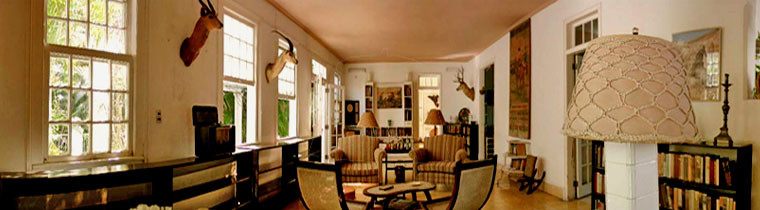
Italian painter Franco Azzinari, who declares himself to be in love with Cuba, its culture and its people, will open the exhibition “Looking for Hemingway” on December 10th at Finca Vigía, the place where the writer lived in Cuba.

Azzinari has visited the island 59 times since 1992 and has painted some 200 paintings linked to his experiences on the island.
He said that when he visited Finca Vigía and met Cojimar’s fishermen, some of whom had met Ernest Hemingway, he became inspired and painted portraits of them, the places related to the U.S. writer, and the flamboyant trees he admired so much.

He also expressed that he has already received proposals to exhibit these pieces in several universities and plans to bring the topic of Hemingway and Cuba to many centers for higher studies in the world.

Azzinari specified that he has never met the 1953 Nobel Literature Prize winner personally, but that he was a friend of Gregorio Fuentes, the skipper of his yacht El Pilar, who was very close to the notable writer.
He also visited the places in which Hemingway used to fish marlins and swordfish in Havana, as well as Kenya, where he contacted members of the masai tribe that participated in the hunting safaris organized by the writer.

With respect to his artistic work, he declared that he has never worked for money and that he keeps most of his pieces, many of which are located in a personal museum that exists in the city of Calabria, following an initiative of the municipal administration of Altomonte in Cosenza.

Wednesday, December 1, 2010

In Cuba, the people is the one who decides


Today, the first of December, party organizations begin the debates on the Draft Guidelines for the Economic and Social Policy of the Party and the Revolution, a process that will include, until February 28, all the labor unions and communities across the country.

What does this debate means?

It means people's participation in the Sixth Congress of the Communist Party to be held in April, 2011, and the possibility that each citizen expresses a view, without restrictions, even if they are not agreed.

Nobody should be left with an opinion to express, much less to be prevented from expressing it. The party demands the maximum of transparency to all organizations, a greater clarity in the analysis, clarifying all the doubts and concerns we have at the very heart of the Revolution.

To participate in the country's destiny is the right of every Cuban, and is also the lightest exercise of socialist democracy and the clearest expression of clarity of the Revolution and its unity with the people.

And it must be the people, because what is at stake is the future of the Cuban nation, which we only guarantee by preserving and developing the social system that we have built from those epic days in the Bay of Pigs, and that we ratified in the Constitution of the Republic, proclaiming that socialism and the political and social system included in it, are final.

On November 8, at the ceremony commemorating the tenth anniversary of the Cooperation Agreement between Cuba and Venezuela, while announcing the Sixth Congress, comrade Raul expressed: "Congress is not only the meeting of those who are elected as delegates, but also the prior process of debates by the membership and the entire population of the guidelines or decisions to be adopted in it. That's why the 6th Congress will be of the entire membership and all the people who actively participate in making key decisions of the Revolution. "

The debate started is the quintessence of the beginning of our Revolution: the people is the one who decides.