Friday, November 13, 2015

Gente de Zona and Marc Anthony to release new single

Cuban duo Gente de Zona and Marc Anthony can make really beautiful music together. Literally. Earlier this year, the Cuban duo paired up with the superstar singer for the energetic “La Gozadera,” a mix of reggaetón and Cuban beats with a thumping bass that climbed to No. 2 on Billboard’s Hot Latin Songs chart. Now the three want to do it all over again. On Friday, Gente de Zona will release "Traidora" (Traitor), the new single from their upcoming U.S. debut, Visualízate, out this Spring on Sony Music Latin. The song, which Billboard was able to listen to exclusively, is more tropical than reggaetón and manages to be rhythmic and lyrical at the same time. Starting with an evocative piano intro, it leads into Anthony’s melancholy vocals (“I know I lost you,” he sings, sentiment overflowing), then gets down to the grit of business with Gente de Zona’s chorus of “Traidora,” over an increasingly present bass. Why another Marc Anthony duet? Gente de Zona’s Alexander Delgado is the first to say they’re not just a collab act, despite the fact that they’ve yet to chart alone (past chart-hitting collabs include “Tu me quemas” with Chino y Nacho and “Piensas” with Pitbull). “We want people to see us not as a band that does collaborations, but as a standalone group,” he said. “Unfortunately,” he added with a laugh, “Our next single is with Marc.” But it is for Gente de Zona’s album. With a bonus. Gente de Zona is managed by Marc Anthony’s new entertainment company, Magnus. / With information from Cubasi

Tuesday, July 7, 2015

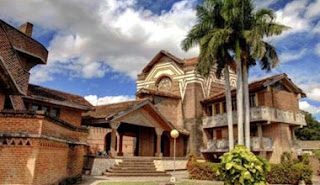
Velasco's modern architectural building, needing restoration

In Velasco, on a triangular piece of land, rises a modern architectural building, in Frank Lloyd Wright style, threatened by the course of time, rain and human insensitivity. In 1961, the prominent cultural promoter Felix Varona, who promoted the socio-cultural development of Velasco, in the municipality of Gibara, started the pro-Cultural Centre campaign with the aim of creating a place for the cultural development of the region. With this purpose he began collecting funds and materials through popular dances, evening events, collecting money in the streets, 20 cents taxes to drivers by crossing the main avenue, and the voluntary contribution “Donate your own brick”. In time, he collected a fund of 10,000 pesos and got the ground with the local government. The place chosen by Varona was a former property of Gibara’s Beola Company, which had the geometry of a scalene triangle, said Jorge Martinez, local historian. Varona commissioned the design of an architectural project that responded to his aspirations, but none presented convinced him. Then, he contacted the Cuban-American architect Walter Betancourt, who donated his project and directed the work, financing his own spending. Although the project was considered too ambitious for a small town, calling it a "crazy idea of Felix and the American", the construction of the cultural centre was approved. Along with Varona and Betancourt joined the master mason Nicasio Santana, who became the right hand man of the architect. They submitted the project to the provincial government of Santiago de Cuba, which approved it and took on its investment in 1964. Construction began on May 4 of that year and although there were many contradictions, it evolved until 1978, when its construction was paralyzed by the death of its architect Betancourt. Hiss successor was the Havana architect Gilberto Sequí Diviñó, a friend very attuned to his architectural conceptions. After 27 years of construction, the institution was inaugurated on March 2, 1991, by the then Minister of Culture Armando Hart Dávalos. The building broke with the traditional rules of conduct for relevant works only in big cities. The Culture Centre is one of the most important monuments of Cuban architecture; this building has an architectural style sui generis of forms and volumes. Betancourt called the house "Song of Cuba" and considered it a modern work, with elements of organic architecture of Frank Lloyd Wright, who sees the beauty of the materials in their original state, without excessive glare and painting. The work also projects from a universal and Cuban eclectic trend, by melting and combining elements and styles: Asian eaves, the great stained glass of the European Gothic cathedrals, pre-Columbian elements such as the Inca terraces, masks and pyramidal walls, as well as towers and colonial military construction loopholes. Too bad that all that beauty has been damaged by moss, termites and rain! The Velasco cultural center has been described by several Cuban figures, such as the renowned Cuban TV presenter Germán Pinelli, who considered the work an “Iron and stone monument that is pure poetry,” while famous Cuban actor Salvador Wood (father) described it as “an unprecedented cultural event in our America”. The Culture Center, National Heritage and first cultural institution built in Cuba after the triumph of the Revolution and bearing the name of a living person, according to local historian Jorge Martinez, was inaugurated 27 years after the beginning of its construction. It was not strange that, in the mid-90s, the theatre and the ballet hall began to present leaks. It was necessary to repair it and its first director, Rafael Rodriguez, using a foreign donation to make a small repair in 1998. After that year it started declining, the wooden floor began to rot, the crystals lost their colour, the theatre that received so many theatrical and dance companies, became deteriorated. Rafael wrote to Cuban historian Eusebio Leal, who expressed a willingness to help, but unfavourable circumstances prevented the trip. The years passed and hurricanes as well, and the dream of Felix and Walter’s masterpiece was killed. The legendary poetry reciter Luis Carbonell said during his visit to the cultural institution in 2005, “the house was built stone by stone, brick by brick, with sweat and effort of the people”. Finally, according to Mari Edil Rondon, current director of the centre, renovation works were included in 2015 investment plan, with an initial budget of 178,000 pesos. After many pleas, critics and comments, mercy has touched the set of this theatre. / With information from www.ahora.cu/en

Monday, June 22, 2015

Earth Has Entered First 'Mass Extinction' Since Dinosaurs, Study Warns

The Earth has entered its sixth mass extinction phase, a new study warns, and the time we have to avoid dramatic consequences is rapidly running out. Vertebrates -- which include mammals, birds, reptiles, amphibians and fish -- are disappearing at a rate 114 times faster than normal, according the study published Friday in the journal Science Advances. The study, led by Stanford, Princeton and the University of California-Berkeley, stated the number of vertebrate species that have gone extinct in the last century normally take 800 to 10,000 years to disappear under natural extinction rates. "These estimates reveal an exceptionally rapid loss of biodiversity over the last few centuries, indicating that a sixth mass extinction is already under way," the researchers wrote. The last such extinction was 65 million years ago, The Telegraph noted, when dinosaurs were wiped off the face of the planet. Human activity related to development and climate change are exacerbating the problem, the study argued. "Our analysis emphasizes that our global society has started to destroy species of other organisms at an accelerating rate, initiating a mass extinction episode unparalleled for 65 million years," the researchers wrote. "Avoiding a true sixth mass extinction will require rapid, greatly intensified efforts to conserve already threatened species and to alleviate pressures on their populations -- notably habitat loss, overexploitation for economic gain, and climate change ... However, the window of opportunity is rapidly closing." The study found that given these extinctions, the benefits of biodiversity like crop pollination and water purification could disappear in as little as three lifetimes, putting the human species in serious danger before others. "If it is allowed to continue," lead study author Gerardo Ceballos told BBC News, "life would take many millions of years to recover and our species itself would likely disappear early on." / With information from CubaSi.cu-Written by Lydia O'Connor

Thursday, April 9, 2015

The beauty of this city

This city of eastern Cuba, which continues to grow in history, culture and people, is celebrating on these days its 470 anniversary of foundation with a beautified image.

Friday, October 31, 2014

Turquino Peak: Natural Paradise

Located in the heart of the Sierra Maestra, Cuba's highest mountain range, the Turquino Peak, rises to 1,974 meters above sea level, on a scenario of 17,540 acres of rivers, forests, valleys and peaks. There are two typical access to scale; one from the territory of the province of Santiago de Cuba and other relatively simple, from the province of Granma. At the top there is a bust of José Martí, the work of sculptor Jilma Madera, which was settled in the centenary year of his birth (1953), by Celia Sanchez and her father. / Taken from www.ahora.cu

Thursday, October 2, 2014

Gold mining, an illegal practice in Holguin

Alberto Ochoa took days digging in the same place. His sense of smell told him that he was getting closer to the precious metal, and he was very close, but of digging his own grave. Luck and rapid assistance of a colleague saved him from death. Now, he complains about the heat that causes the bandage on his body, but is happy to be alive to tell the story. In Holguin, people like Alberto have digged holes wherever they think they might be able to find gold, in order to fill their pockets with money. But these ignorant persons are not aware of the damage they cause to the environment and their health. What initially became an intermittent practice in the old gold mine at the community of Aguas Claras, in the head municipality, has been extended to the towns of Moa, "Rafael Freyre" and Báguano. AFTERMATH OF A FEVER A tour of some mining areas shows an apocalyptic landscape. The community “Tres Fiebres”, located in the mountainous region of Moa, seems a crater within this natural paradise that is the Alejandro de Humboldt National Park, World Heritage Site since 2001. Several gold seekers have arrived there, posing a threat to environment. Near the river Calentura, gold-seekers have indiscriminately cut trees to build temporary camps. There, they cook their food and sleep during the week stay. Not all of them are from Holguin, as there are "visitors" from Guantanamo and Santiago de Cuba. Also, although it is cause for concern, there are women and children. When asked if they were sure that particles obtained were gold, they said that others were engaged in check, showing that behind these makeshift miners there are magnates with knowledge and experience in the field, who take the best part of the business without spending any work. Throughout the strip of land that runs alongside the river, there are several excavations showing morphological damage to the soil and sediment of the river. On the land, there are pieces of nylon, plastic bottles, cardboard and food waste. Rolber Reyes, acting head of the Environmental Unit at the Provincial Delegation of CITMA, said the illegal gold mining generates, in environmental terms, quite negative impacts, mainly for the effects on river banks, erosion soils, vegetation clearing and water pollution. "Gold is always found in very small amounts and its extraction becomes complicated. To separate gold fom other minerals dangerous substances are used, such as mercury and sodium cyanide, whose neglectful use near rivers can cause irreparable damages to the ecosystem and human health. Of course, such chemicals do not reach their hands by magic, but they are "managed" through state agencies. "In the case of cyanide death is quick, but poisoning with heavy metals such as mercury tends to lead to a long suffering, such is the case of umans who eat fish contaminated with mercury can be poisoned. Currently the CITMA delegation is carrying out a process of control and inventory of substances that can be used in the illegal mining. Thus, we will have a systematic information on their use and existence in each entity, " explained Reyes.
These people's desire of making some money, do not let them to consider the damages they cause to environment. According to Rafael, a young boy engaged in the activity: "In the world there are a lot of people doing worse things to the environment, and what I do is not so serious. Besides, I'm earning money by the sweat of my work, without stealing anytnhing to anyone. " Environment is heritage and main concern of the nation; as such, resources must be maximized, according to environmental and development policy. People are not allowed to dig, just like that. Legal procedures are needed, protected by laws, decree-laws and legal standards. The control and fight against this crime have help to reduce illegal gold mining in the territory, but authorities should not lower guard. The work needs to be systematic and tenants of the areas should effectively manage their assets. We can not allow the gold fever to become an epidemic. If we don't take the measures, damage to environment and human life can be irreversible. / Written by Luis Mario Rodríguez Suñol

Monday, September 8, 2014

The Virgin of Charity –Cuba’s Patron Saint

Every September 8th Cubans pay tribute to La Virgen de la Caridad or the Virgen of Charity of El Cobre, the most cherished religious image in Cuba. Located in the town of El Cobre, few kilometers away from the eastern city of Santiago de Cuba, the Virgin’s sanctuary is visited by thousands of people from all over the world to pay promises and carry small copper rocks from a nearby mine, which, according to devout believers, give people good luck. The legend has it that at the end of the 16th century three fishermen –Juan Esclavo, Juan Indio and Juan Pescador (John, the slave, John, the Indian, and John, the fisherman)- found the image of the virgin in the middle of a storm in the immense Nipe Bay in what is today known as the eastern province of Holguín. At the time of the finding, the piece of wood holding the image, which had a rare beauty and a copper-colored skin, read: “I AM THE VIRGIN OF CHARITY”. It is said that it appeared in the large bay to save the fishermen, symbolizing the birth of a people and a nation, made up of Spanish, African and Indian ancestors. On September 24th, 1915, high ranking officers and members of the former Liberation or “Mambí” Army, who had fought on the island’s second independence war against Spain, asked Pope Benedict XV to proclaim the Virgin of Charity of “El Cobre” as Cuba’s Patron Saint. In a mass held the same day, the “mambises”, or former independence fighters, packed the old Sanctuary in the small town of El Cobre to request the canonical declaration from the Catholic Church. They also offered the Virgin a Cuban flag and promised to support the building of a new Sanctuary. The canonical proclamation was approved by Papal decree on May 10th, 1916, less than a year after the Cuban patriots had requested it. The new Sanctuary opened on September 8th, 1927, 11 years after the proclamation. Years later, Pope Pious XI authorized the canonical coronation of the sacred image, but it was not until the morning of December 20, 1936 that the coronation ceremony was held and celebrated by Santiago de Cuba’s Bishop Monsignor Valentín Zubizarreta. Much later, the Virgin of Charity of “El Cobre” –Cuba’s Patron Saint- was personally crowned by Pope John Paul II in a public mass at Santiago de Cuba’s Antonio Maceo Square during his historical visit to Cuba in 1998. The Sanctuary of the Virgin of Charity of “El Cobre” is a neoclassical style construction built in 1927 on the summit of a hill on the island’s oldest copper mine which began to be exploited in the late 16th century. The current sanctuary, where mass is given every morning, has a silver altar and other highly valuable ornamental objects. Under the virgin, you can find the so called Chapel of Miracles, a small room where believers pay promises and deposit different offerings, including gold and precious stone jewels, clutches and other objects. The Chapel of Miracles treasures the gold medal awarded to US writer Ernest Hemingway when he was proclaimed a Nobel Literature Prize laureate in 1954, donating it to the people of Cuba and offering it to the Virgin. The Virgin of Charity is also known as “Virgen Mambisa” or “Mambí” Virgin due to the devotion of fighters for the island’s independence wars against Spain, who were better known as “mambises”. The Virgin is also worshipped by Afro-Cuban religious believers. In the Yoruba religion, the Virgin of Charity of “El Cobre” is known as “Ochún,” the deity of love and money and the owner of running water. Her festivities are linked to those of her sister “Yemayá” or “Yemanyá”, the Goddess of the Ocean, or the Virgin of Regla in the Catholic Pantheon, to whom believers pay tribute on September 7th. The Virgin of Charity of “El Cobre” is part of the Cuban people’s spirit and culture and the virgin, the sanctuary and its surroundings have been declared by the Cuban National Heritage Commission as a Heritage of the Cuban nation. / With information from radio Havana Cuba